Today, Saturday we walked around the main street in Koza. Koza is a part of the city of Okinawa in which U.S. Marine Corps had built a base during World War II and from which they cannot seem part and give back to the people of the island. It is so necessary for the military, but the same for the islanders as well.
Koza district provides daily needs of American military personnel. There are restaurants that serve American fares like Tacos, Steaks and burgers. Many newer Okinawa cuisine derived from serving the Americans. There are shops, Music – live band bars and so on. But on Saturday mornings… it’s eerily empty.
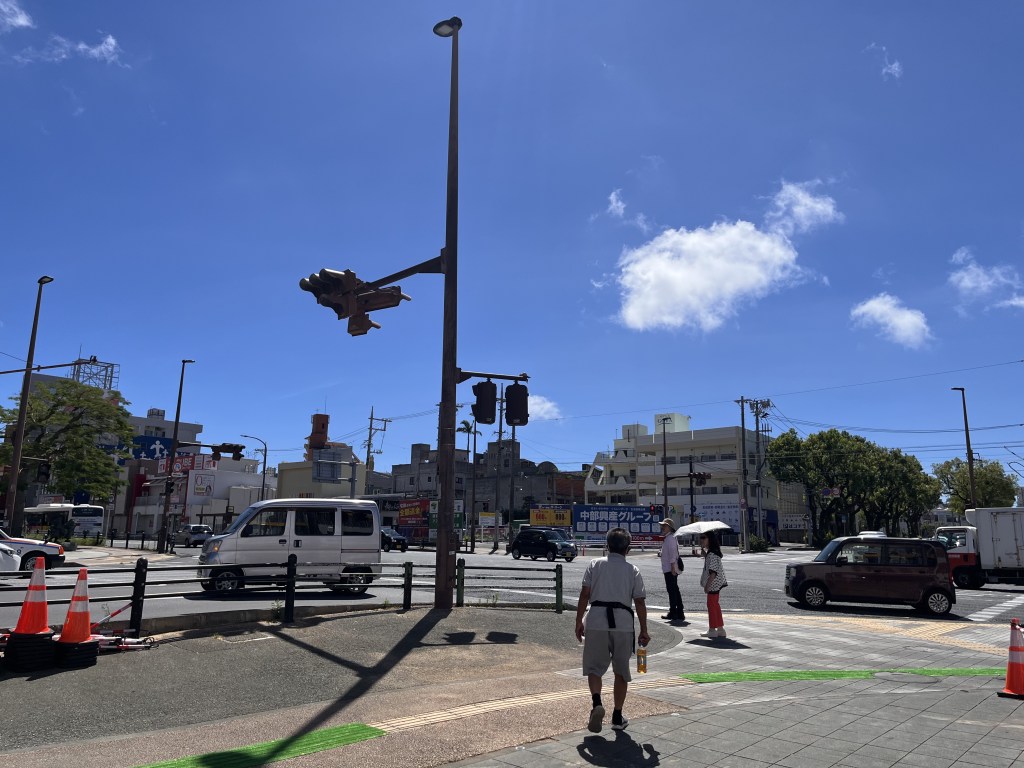
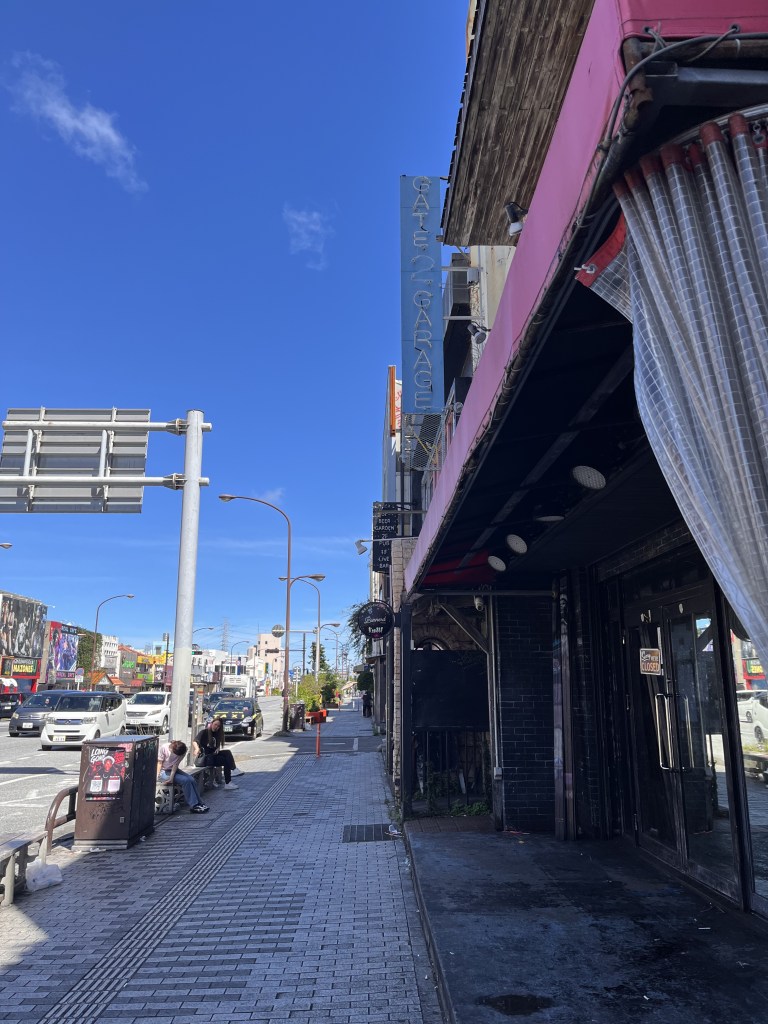
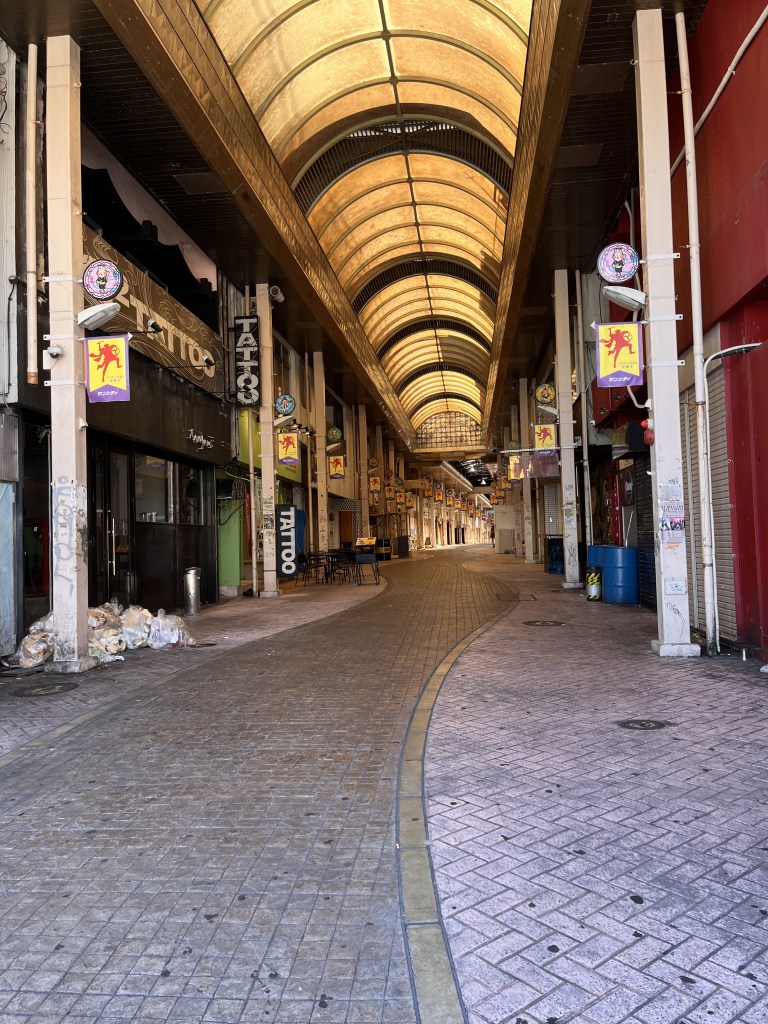
This morning it was quite hot and humid. Aha! That’s the reason for late openings of stores! It doesn’t get active until late in the afternoon when it’s cooler!
The group split into three teams so that each were small enough to visit the Histreet Museum that showcases relics from Okinawa’s post-war period. Our group got there too early, so we walked over to the entrance of the Kadena Air Base to kill some time.
There is a white line on the ground that delineates the boundary of the U.S. property.
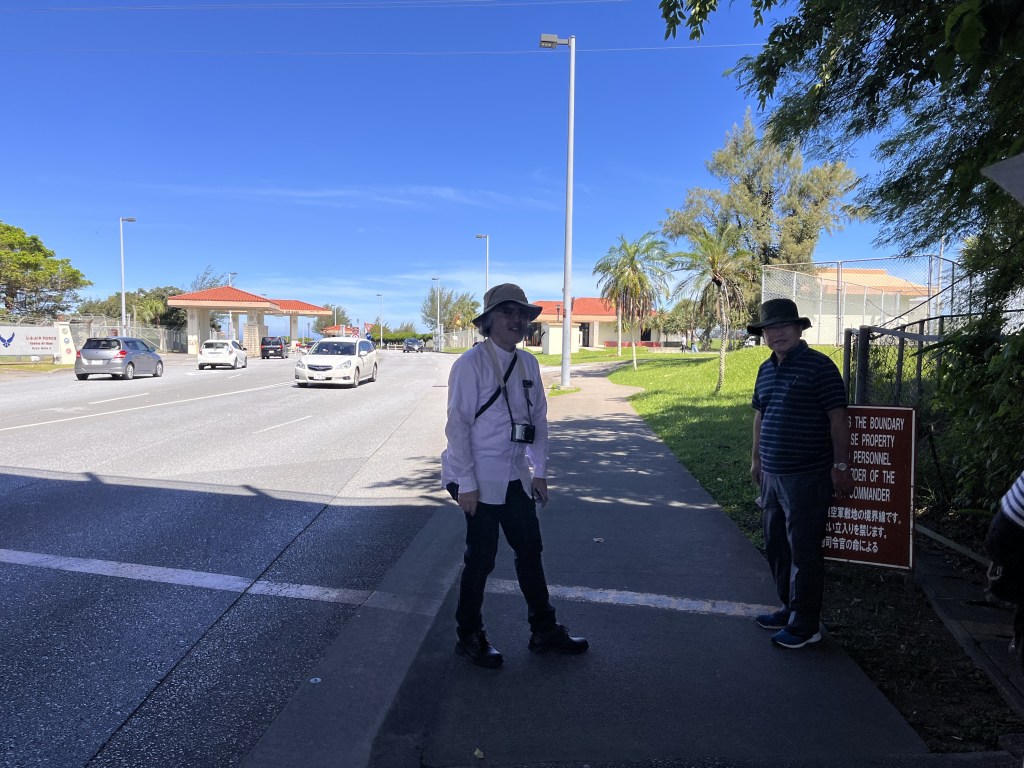
We then made it back to the museum at around 10:30 and got a tour.
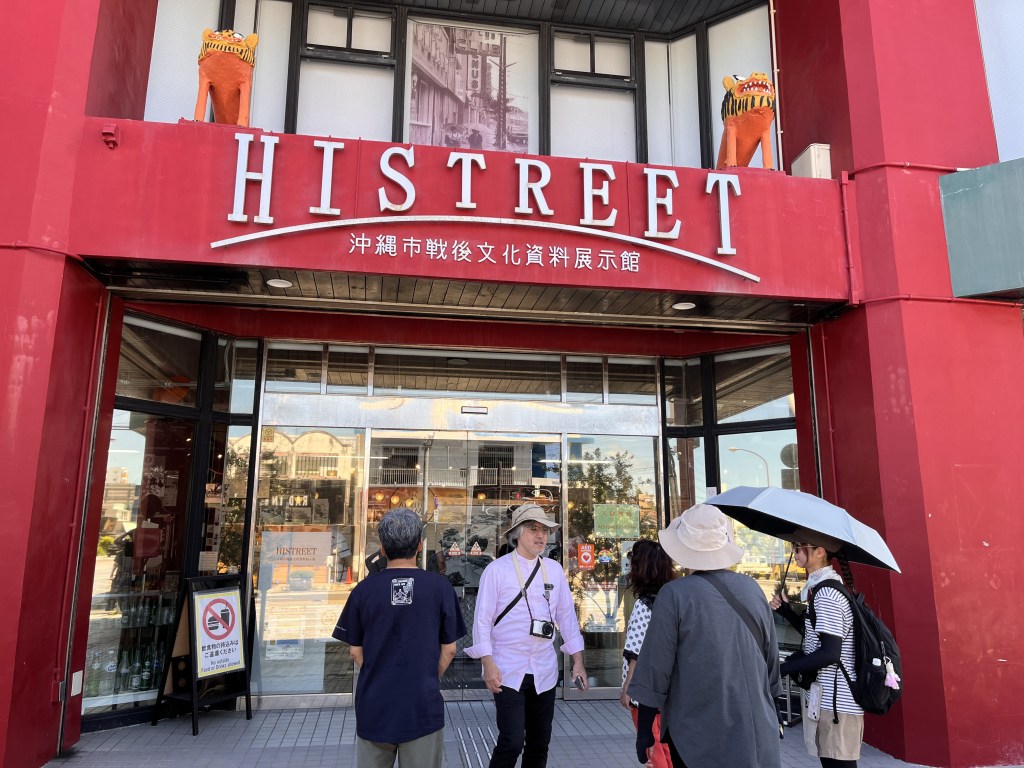
Photography was prohibited.
In the exhibit there were some military relics. There were diffused cluster bomblets, There was a Japanese cannon that were designed back in the early 1900s for past wars, but because Japanese armies lacked so much, they were put into use.
As for post war relics, there was an empty canister that was turned into the body of a san-shin (三線), the Okinawa Shamisen. There was a wash board the islanders cleverly made out of a rolled out metal canister into which they drove through many nail holes that provided abrasion for washing. Or was it a glorified oroshi-gane (grater) for Okinawa Original cooking??
There were black and white pictures of the 1970 riot sparked by clashes between the locals and the US military personnels when a soldier was drunk-driving and accidentally struck an Okinawa resident. Even though the man was alright, a crowd of locals, already frustrated with American justice that constantly ruled injustly against the locals, exploded in anger.
We walked through empty streets to get back to where we started, where the tour bus would take us to our next destination – to Henoko.
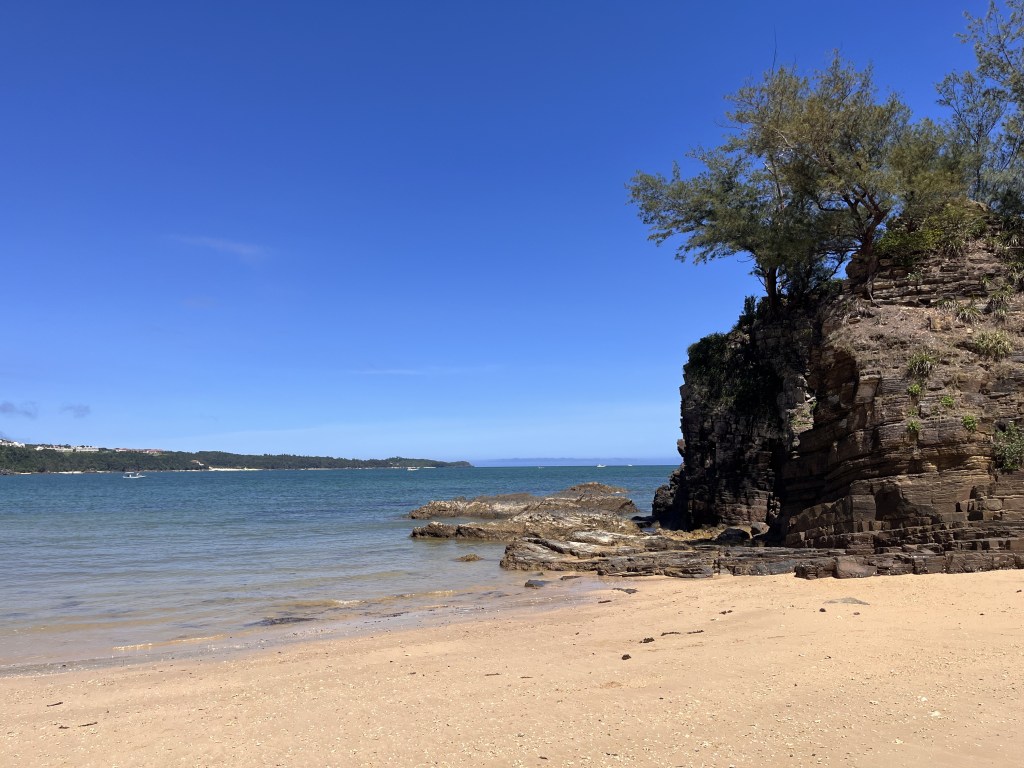
Henoko is a beautiful bay where U.S. Marine Corps is relocating its base from Futenma. They are expanding the land to be able to build the necessary runways by reclaiming. Because they found out that some parts of the seabed is too soft to be reclaimed, they are driving 71,000 sand piles to strengthen these areas. We were discouraged from taking pictures of the reclamation activities.
Local fishermen have protested, and so did ecologists who know the endangered species that thrive in the area and the threat such development will cause. All to no avail.
This past March on the 16th, there was a boat accident in Henoko that took the lives of a highschool student and a captain of one of the ships. Because of this tragedy, our visit was rather subdued. We visited the beach close to the on-going construction where we prayed for the two that perished.
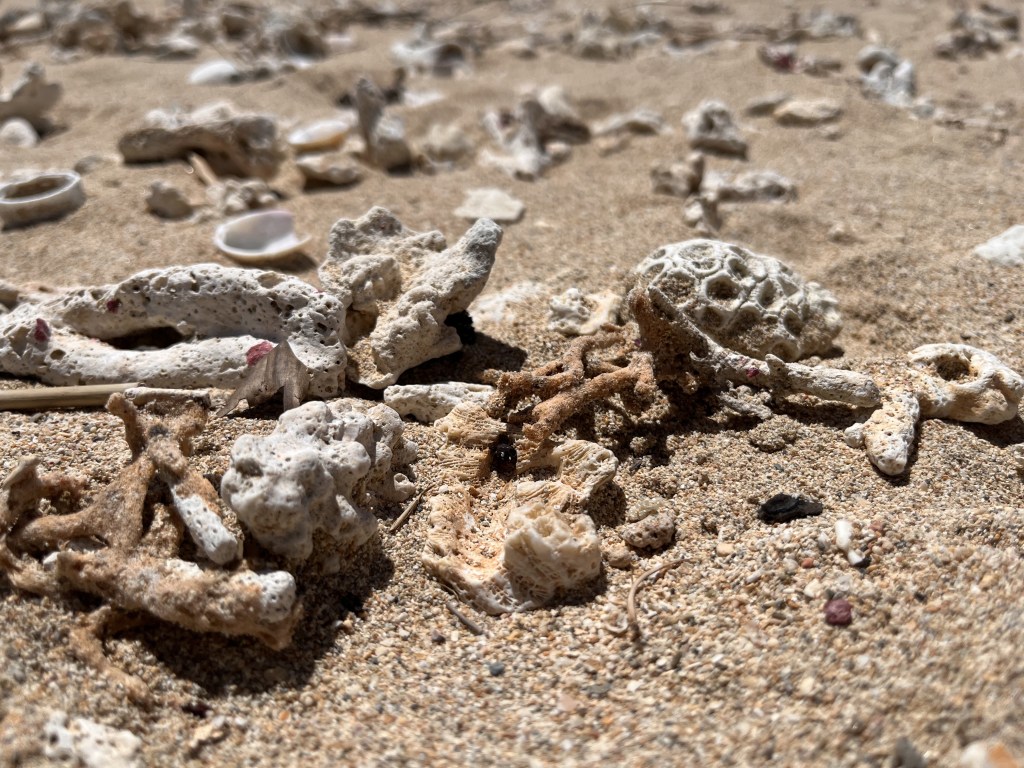
The weather was absolutely beautiful at the beach – a bit windy, but sunny. The sand is perhaps 10 percent dead coral. Look down into the sand, and you can see coral fragments everywhere!
After the visit we met as a group at the Cathedral of St. Peter and St. Paul. We heard Bishop David Eisho Uehara talk about the people of Okinawa – how they survived after the war when the island was completely destroyed and there were absolutely no industry to work for – only serving the American military.
Most of the men had died during the war, and besides, there were no businesses left to run. The women had to do whatever it took just to survive. Forget shame or right or wrong – they had to go on living, and they did whatever was needed to do just that. What a story of bravery and the will to live.
During the Evening Prayer Service, we sang a hymn from the NSKK Hymnal book #423. I offered to play the melody on the flute as people sang. Since I had to read the music, I wasn’t aware of the lyric. In the middle of the second verse, it dawned on me the melody sounded very Okinawan with missing 2nd and 6th, so perhaps it’s about Okinawa. I was then afraid to look at the lyric as, if so, I knew it would have made me unable to play anymore, because I would be sobbing. I was able to play all the way to the end of the third verse this way.
People commented how the flute imitated the sound of wind blowing in Okinawa and that it was very effective. The organist for the Sunday Memorial Day Service was in attendance, and excitedly she asked if I would play with her and two san-shin players. So we rehearsed on the spot and I promised to come the next day a bit early for the Memorial Day Service.
A former manager at the bank where I work in New York who now lives in Okinawa, picked me up afterwards and took me out to eat that night to a Gyoza place. It was so good to see and speak with him after over 10 years!


Leave a comment