Fr. Hayashi told me that he will be picking me up at Akashi Station just like the week before, but this time at 7:30 am! so I had to leave Kobe by around 6:45 am.
The ride to Emmanuel Church in Tokushima was quite long going straight through Awaji Island past Sumoto where Fr. Hayashi took me last week, and onto the Island of Shikoku through Ōnaruto Bridge (大鳴門橋) where, on the other side, Tokushima Prefecture is found. From Akashi to the Church it took two and a half hours!
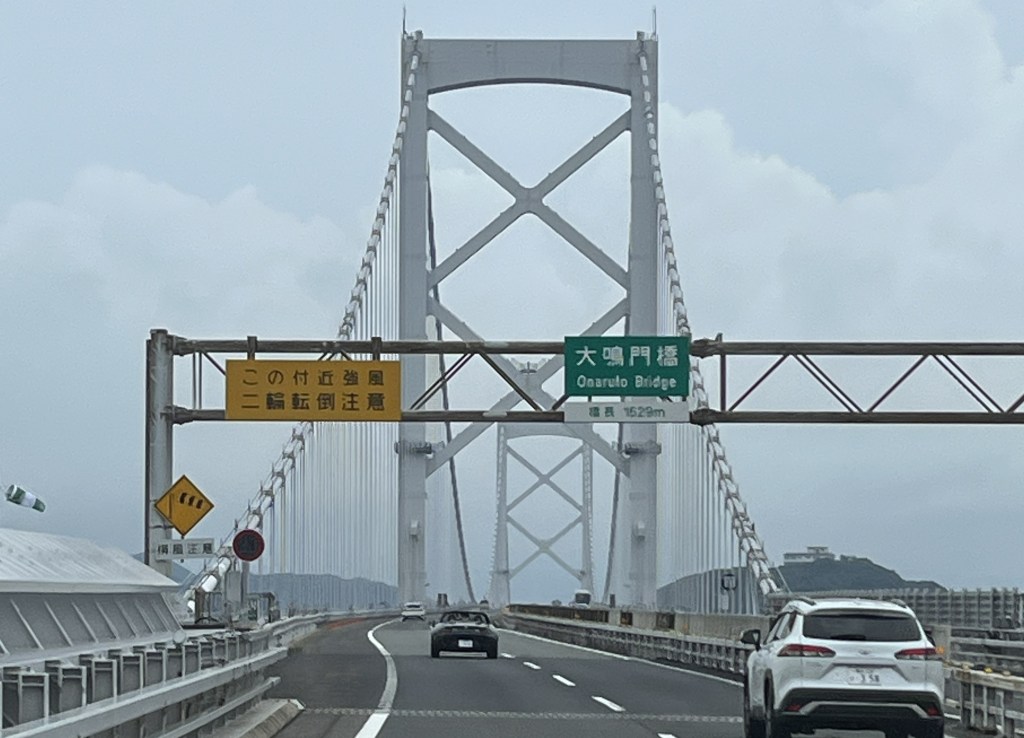
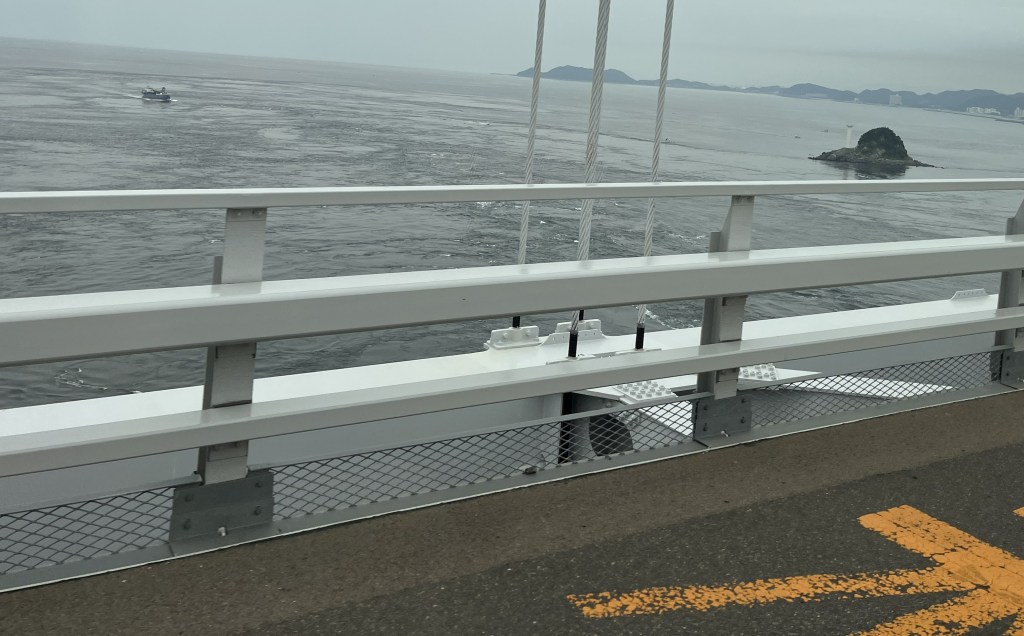
Naruto is known for the strong current that, mixed with the tide causes a giant, awesome whirlpool to form. You can see the current even in the picture I took.
In 1880 Missioner Fr. H. Evington came to Tokushima for a health retreat. One year later he came back and began his missionary work, and soon he baptized three persons. In 1884 Bishop Poole (CMS, England) visited to perform confirmation, and this was the beginning of Emmanuel Church.
In 1885 the principal of Trinity School of Theology in Osaka, the Archdeacon C. F. Warren became the second parish priest, and this triggered a full support for missionary from CMS (Church Missionary Society- England) and allowed students and faculty from the seminary to visit Tokushima and strengthened the missionary work here.
The Church Building was completed in 1889 and named “Tomitabashisuji Sei-Ko-Kai (富田橋筋聖公会),” but the church burned down within three weeks. The new church built and consecrated in 1894 was named “Emmanuel Church.” In 1899 the church consecrated a plot they purchased for burial, and the church kept growing.
With the developing war in the early Showa-Era (1925 – 1988?), the missionaries had no choice but to leave the country. The situation continued to worsen, and even Fr. Masao Paul Furumoto was incarcerated for 35 days. Then in July of 1945, the U.S. air raid over Tokushima burned down the church. Fortunately Saint Timothy’s Church survived the bombing. They continued their worship in a joint service until after the war when they were able to rebuild another church in August of 1949, which was consecrated by Bishop Hinsuke Yashiro.
Tokushima thrived with many churches being born since then. Their programs included Kindergarten, Youth groups, and young adults group. My understanding is that the Middle/High school summer camp drew at one time over 200 participants many of whom are now in the leadership within their churches. The church membership has dwindled somewhat, and many of these programs came to a close, but the parish continues to do a lot to reach out to the community of Tokushima, like the Cancer Cafe.
~~~~~~~~~~~~~~~~~~~~~~~~~~~~~~~~~~~~~~~~~~~~~~~~~~~~
Fr. Hayashi serves here at Emmanuel Church in Tokushima once a month as well. Each month he makes his rounds to two churches in addition to his home parish in Akashi – Saint Mary Magdalene.
In Nippon Sei-Ko Kai, the Bishop assigns priests in the diocese to the parishes. This has been the rule, much like a normal Japanese businesses where the employees are at the mercy of the management as to where they are assigned.
In contrast, in the U.S. a priest is employed by each parish through contract negotiation, and this is much the same in the U.S. businesses. I believe the bishop makes the final approval decision, but I don’t think I’ve heard of any cases where a match was rescinded by the bishop. I’ll have to check the Canon of the Episcopal Church to find out more.
Fr. Osada who is in charge of the Diocesan Office came from Saint Timothy Church, the other church in the city of Tokushima, so we are visiting his hometown! We passed by St. Timothy’s on our way to Emmanuel Church.
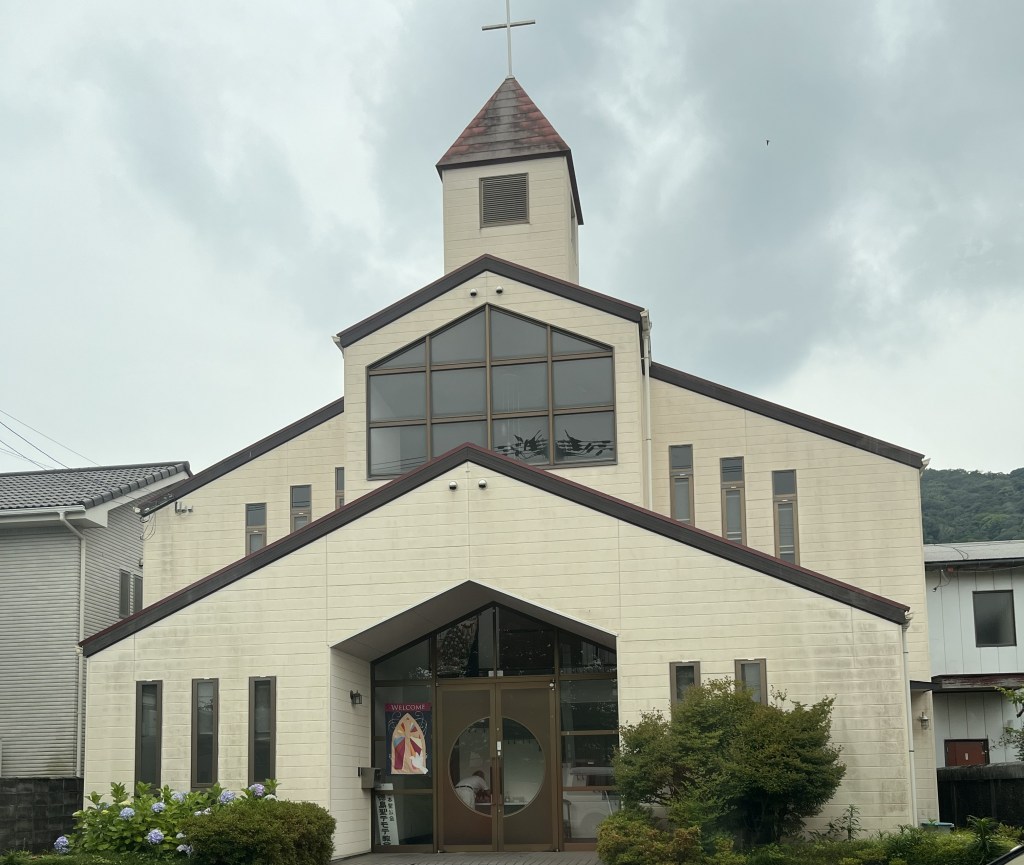
When I first entered Emmanuel Church (I forgot to take outside picture of the Church!), the first thing I notice is a sign that said “Cancer Cafe”. This is a ministry they started to help provide a cafe where Cancer Patients and their families have a quiet and welcoming place to talk about their ordeals and hopes with one another.
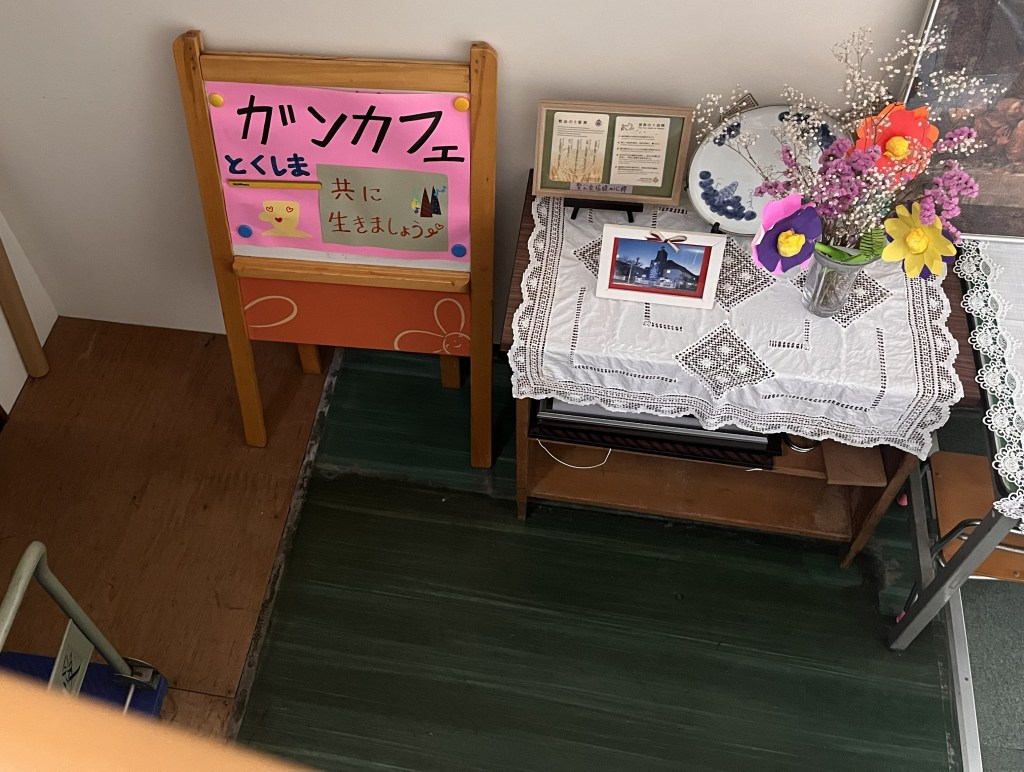
It’s always encouraging to see parishes find ways to reach out to the greater community. Archbishop of Canterbury, William Temple famously said, “The Church is the only society that exists for the benefit of those who are not its members,” and when this outward service is being performed rather than inward one like a country club, a church functions well as a body of Christ.
I was asked to play the flute during the service, so I met up with the organist of the day and found out the hymns. They chant the service prayers such as Gloria and the Nicene Creed, to which I said I’ll chant (sing) those, but I will play the hymns on the flute.
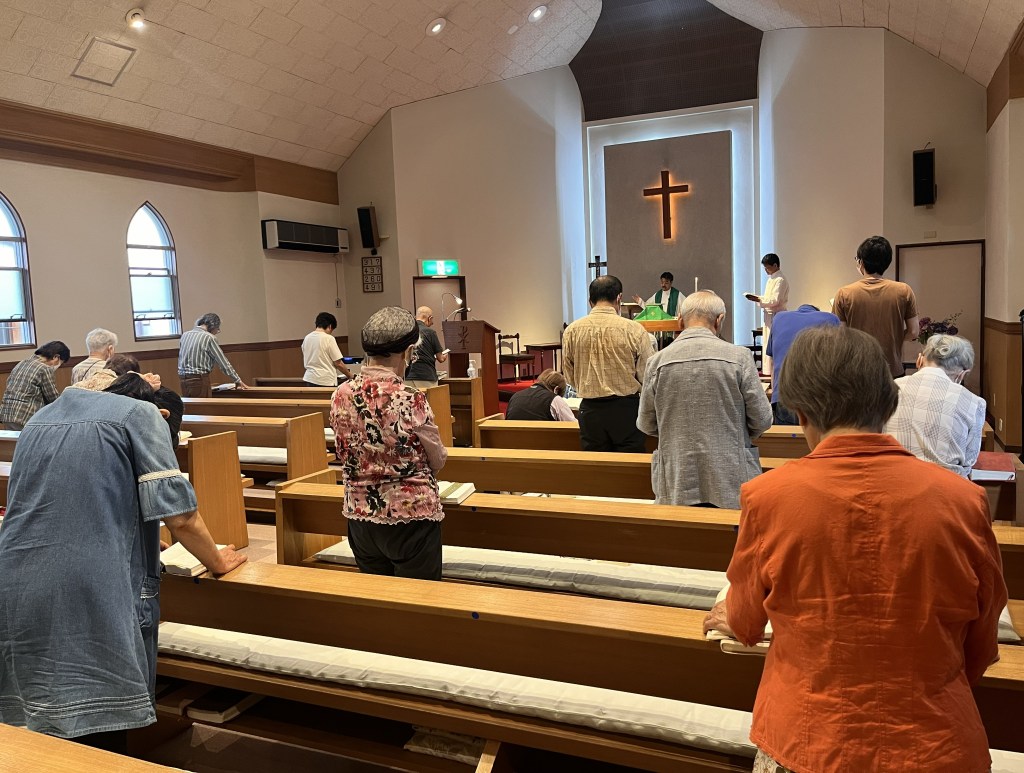
I believe they enjoyed my playing the hymn melodies on the flute, but I’m really not sure. I’ve heard that as a general trend, some parishioners in Japan expect a Japanese priest to only be a priest (Officiant, Sermon-giver, Eucharist provider). For such persons doing anything else is considered unbecoming, even distracting. In another word, other gifts a priest might be endowed by God’s grace may be going to waste. The thought that a priest can’t freely exercise his gifts is unfortunate.
On the other hand, I was introduced as a seminarian “in the U.S. Episcopal church,” let alone from the Diocese of New York! A week ago when the Bishop at St. Michael’s introduced me as a seminarian from Diocese of New York, people wow-ed – you could hear the gasps of awe. No, I’m not a Japanese who grew up in Japan. I’m an American seminarian who happens to look and speak like a Japanese. As such, people may be more open to my “un-Japanese” behavior, even in rural Japan.
I know that everyone here is amazed when they find out I lived most of my life speaking English and yet able to speak Japanese fully. I’m proud of my heritage, but I must also remember that I’m an American, and a day will come when I will be rudely awakened to the fact that I will most likely never be accepted fully as a Japanese. I will always be a guest and be treated as such. I must look at this situation positively as an advantage, rather than an obstacle.
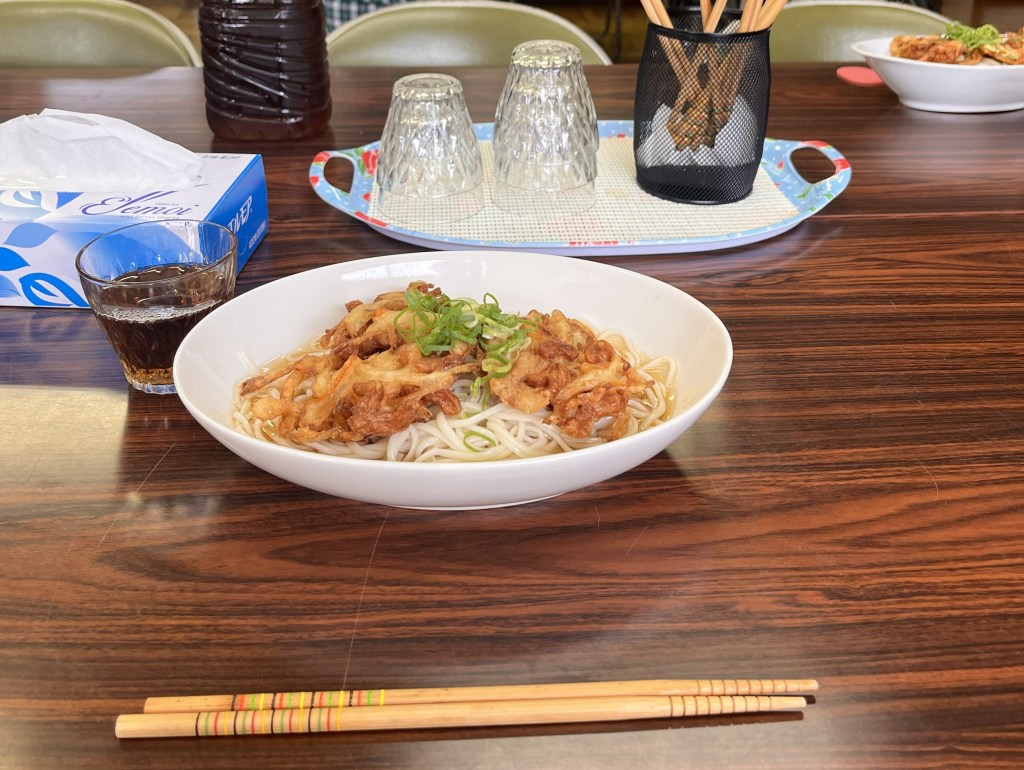
After the service we stayed for luncheon. They said they don’t do this every Sunday, but because Fr. Hayashi is visiting, they decided to have one! Lucky me to be traveling with him! The lunch consisted of Handa Sōmen, a type of noodle only found in the Handa region in Shikoku. It is served in cold broth, and I can’t tell you how delicious it was. Unlike regular sōmen which is thinner than angel’s hair pasta, it was hand stretched and of various thickness even within one strand!
The trips that Fr. Hayashi takes me to, as well as when other priests take me to places, are in most cases long distance. They travel far and wide to serve these “outpost” parishes, simply because there is not enough priests to serve all the parishes. Just about every clergy must help provide leadership to all the parishes, and this translates to long distance drives each month. This seems to be the fact of life in the Diocese of Kobe.
These long distance rides are my best chances to get to know more about their experiences as priests in the Nippon Sei-Ko-Kai.


Leave a Reply